
Gazipaşa Travel Guide: Coast, Ancient Cities and Local Life
Explore Gazipaşa’s varied beaches, Koru’s natural rock pools, ancient Cilician sites and the everyday character of this agricultural town.
Instant price
Book your transfer
Choose your route, travel date and passengers to see your fixed price.
- Fixed price
- Free cancellation
- Flight tracking
Gazipaşa is a small, lived-in agricultural town set slightly inland from a coast that shifts between long beach sections, rocky shelves and compact coves. Greenhouses, banana plots and orchards spread across the plain, while newer neighbourhoods reach towards the sea. This is not an old-town showpiece or a continuous all-inclusive strip. Everyday shops, restaurants and local services shape the place as much as its waterfront.
A Gazipaşa travel guide to the coast
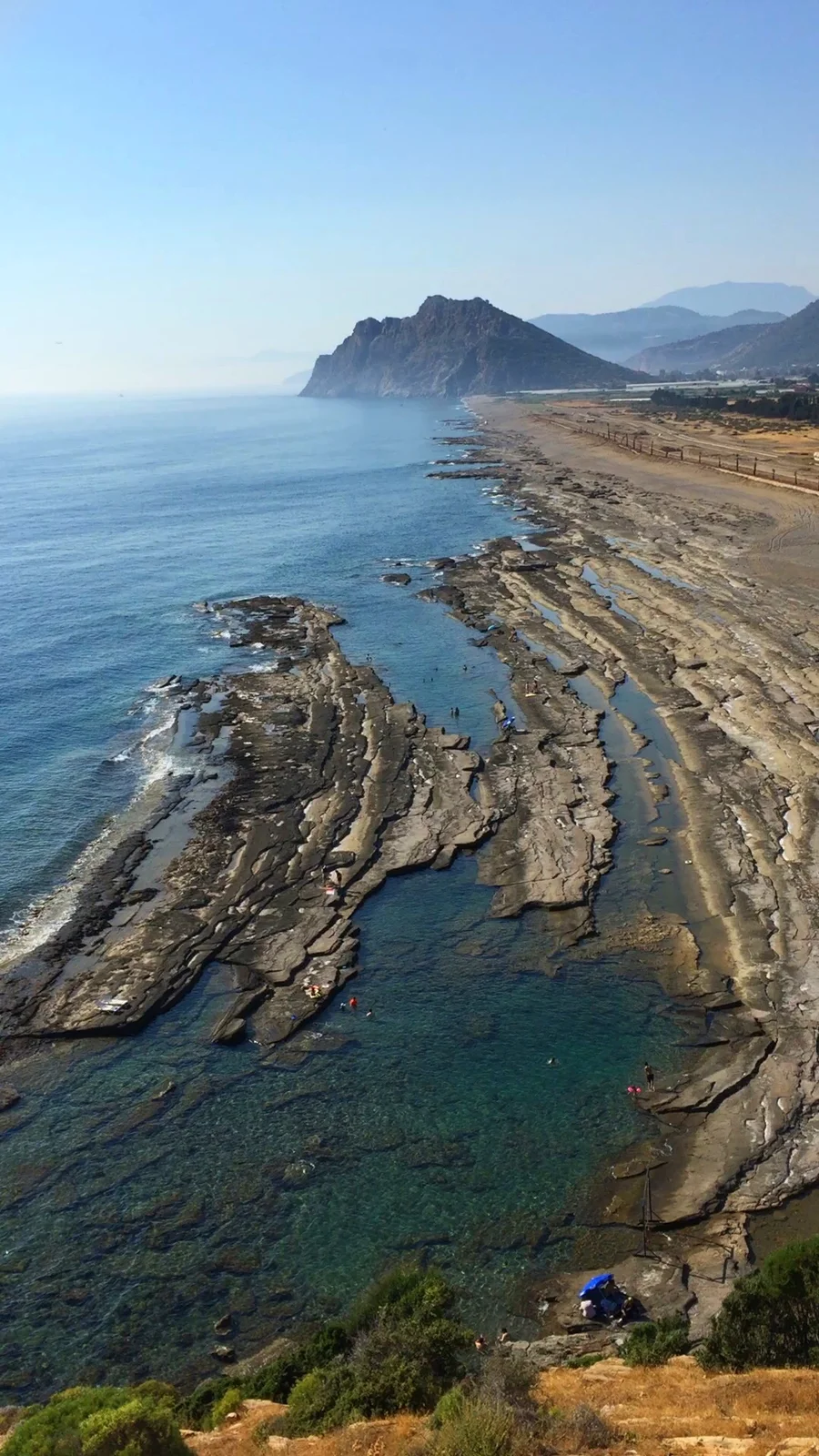
The main coastal focus is around Selinus Beach, the mouth of Hacımusa Çayı and the harbour. The broad shore includes sandy and pebbly sections, while the ruins of ancient Selinus rise on the hill and lower slopes beside the beach. West of here, Koru Beach is marked by layered limestone shelves that form natural seawater pools. Their depth and shape depend on natural conditions, and waves can wash across the rocks.
Elsewhere, Kahyalar and other open beach sections add variety, though surfaces and facilities differ. East along the more rugged coast, Delik Deniz–Kral Koyu sits below ancient Antiochia ad Cragum. Its compact bay and natural rock arch are striking in favourable weather, but access conditions can change.
Local flavours and unhurried evenings
Agriculture is visible rather than decorative here. Bananas and avocados are closely associated with the district, as is its seedless pomegranate, protected by a geographical indication. Mangoes, papayas and dragon fruit also grow in this warm corner of the coastal plain. In the evening, attention generally shifts to local restaurants, cafés, the town centre and the Selinus waterfront rather than a large club district.
Accommodation is similarly dispersed. Compared with the larger resort setting of neighbouring Alanya, Gazipaşa feels more like a working town with several separate coastal pockets.
Ancient hills and a limestone cave
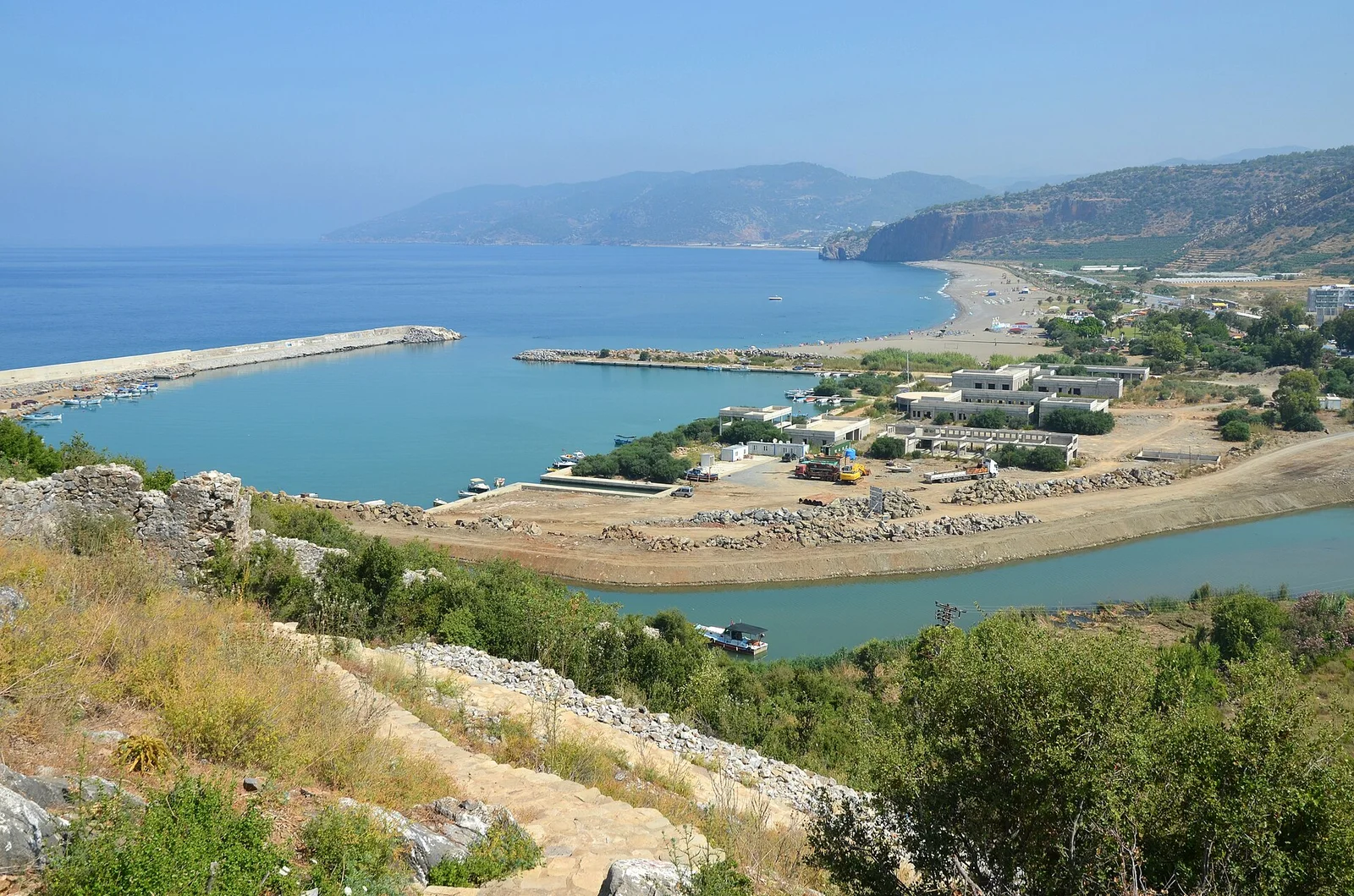
Selinus occupies the hill and lower slopes beside the river, harbour and beach. Once a port city of mountainous Cilicia, it remained inhabited through Hellenistic, Roman, Byzantine, Seljuk and later periods. Fortifications, bath and agora structures, cisterns, a necropolis and an odeon reveal that long chronology. Roman emperor Trajan died at Selinus, and the city subsequently became associated with the name Traianopolis.
Near Güneyköy, Antiochia ad Cragum spreads across elevated, rugged ground. Named after Commagene king Antiochus IV and occupied in Roman and Byzantine times, it preserves remains including a colonnaded street, agora, bath, church, necropolis and later fortifications. Inland near Beyrebucak, Yalan Dünya Cave contains chambers and passages shaped by stalactites and stalagmites. Only a limited prepared section of the much larger system has been used for visits.
Five places that capture Gazipaşa
- Selinus hill and waterfront: harbour, broad beach and layers of urban history share one landscape.
- Koru Beach: natural pools sit among the coast’s distinctive limestone shelves.
- Antiochia ad Cragum: elevated ruins open onto a rugged mountainous Cilician setting.
- Delik Deniz–Kral Koyu: a small rocky bay is framed by its natural sea arch.
- Yalan Dünya Cave: underground chambers reveal the district’s limestone geology.
Where to stay and when to visit
The town centre suits travellers who value local streets, restaurants and everyday services. The Selinus and harbour coast puts the beach and waterfront closer, while small properties in outlying coastal or rural areas offer a more dispersed setting with fewer places within walking distance. There is no single best base; the useful choice depends on whether town life, the shore or a quieter rural position matters most.
Summers are hot, dry and the busiest time on the beaches. Spring and autumn often make it easier to combine the coast with ruins and the cave in milder heat. Winters are generally mild and rainier, and some tourism businesses may reduce their operations.
Airport transfers to Gazipaşa
The district is served by nearby Gazipaşa–Alanya Airport. Antalya Airport transfers to Gazipaşa are another arrival option from farther west. The route page brings together the live vehicle options and booking information for this connection. Travellers can arrange the journey from the airport to their accommodation before they arrive.
Ready to book your transfer?
Fixed price, meet & greet, 24/7 — get an instant quote.
Frequently asked questions
The coastline is varied, with broad sandy and pebbly sections, rocky shelves and small coves. Selinus is the main town-facing beach, while Koru is known for natural seawater pools in its limestone shore; sea conditions and facilities vary from place to place.
The strongest combination is Selinus and its waterfront, the ruins of Antiochia ad Cragum, Koru’s rock pools and the Delik Deniz–Kral Koyu landscape. Yalan Dünya Cave adds an inland contrast, while the town and agricultural plain reveal Gazipaşa’s everyday character.
Gazipaşa generally suits travellers looking for a lower-key coastal base rather than a large resort strip or club district. Evenings tend to centre on restaurants, cafés and the waterfront, although atmosphere varies by area and beaches become busier in summer.
The town centre is practical for restaurants and everyday services, while the Selinus and harbour area keeps the waterfront close. Outlying coastal and rural properties feel more spread out, so the best area depends on the setting you prefer rather than one universal choice.
Summer brings hot, dry weather and the busiest beaches. Spring and autumn often suit a trip that combines the coast, ancient sites and the cave in milder heat, while winter is generally mild, rainier and quieter, with some tourism businesses operating less.