
Things to See in Demre: Myra, Kekova and the Coast
Explore Demre’s Lycian tombs, Saint Nicholas Church, Andriake harbour, Kekova waters and varied Mediterranean beaches.
Instant price
Book your transfer
Choose your route, travel date and passengers to see your fixed price.
- Fixed price
- Free cancellation
- Flight tracking
Demre spreads across a fertile plain where greenhouses and vegetable fields fill the space between a modest town centre and steep mountains. The main things to see in Demre sit remarkably close to everyday streets: ancient tombs, a landmark church and the remains of a Roman harbour, while Çayağzı and Andriake open onto wetlands, beaches and the Mediterranean.
Between the mountains and the Mediterranean
On western Antalya’s Mediterranean coast, Demre lies between Finike to the east and Kaş to the west. The Demre River formed the alluvial plain beneath the town, and intensive agriculture still shapes the view through long ranks of greenhouse roofs and cultivated plots.
This is not a single-purpose resort strip. Accommodation tends to be smaller in scale than in Antalya’s large resort belts, and evenings usually retain a quiet, local rhythm. Demre’s must-see sites, including Myra and Saint Nicholas Church, sit beside shops, homes and cultivated land rather than in an isolated heritage zone.
Myra’s rock tombs and Roman theatre
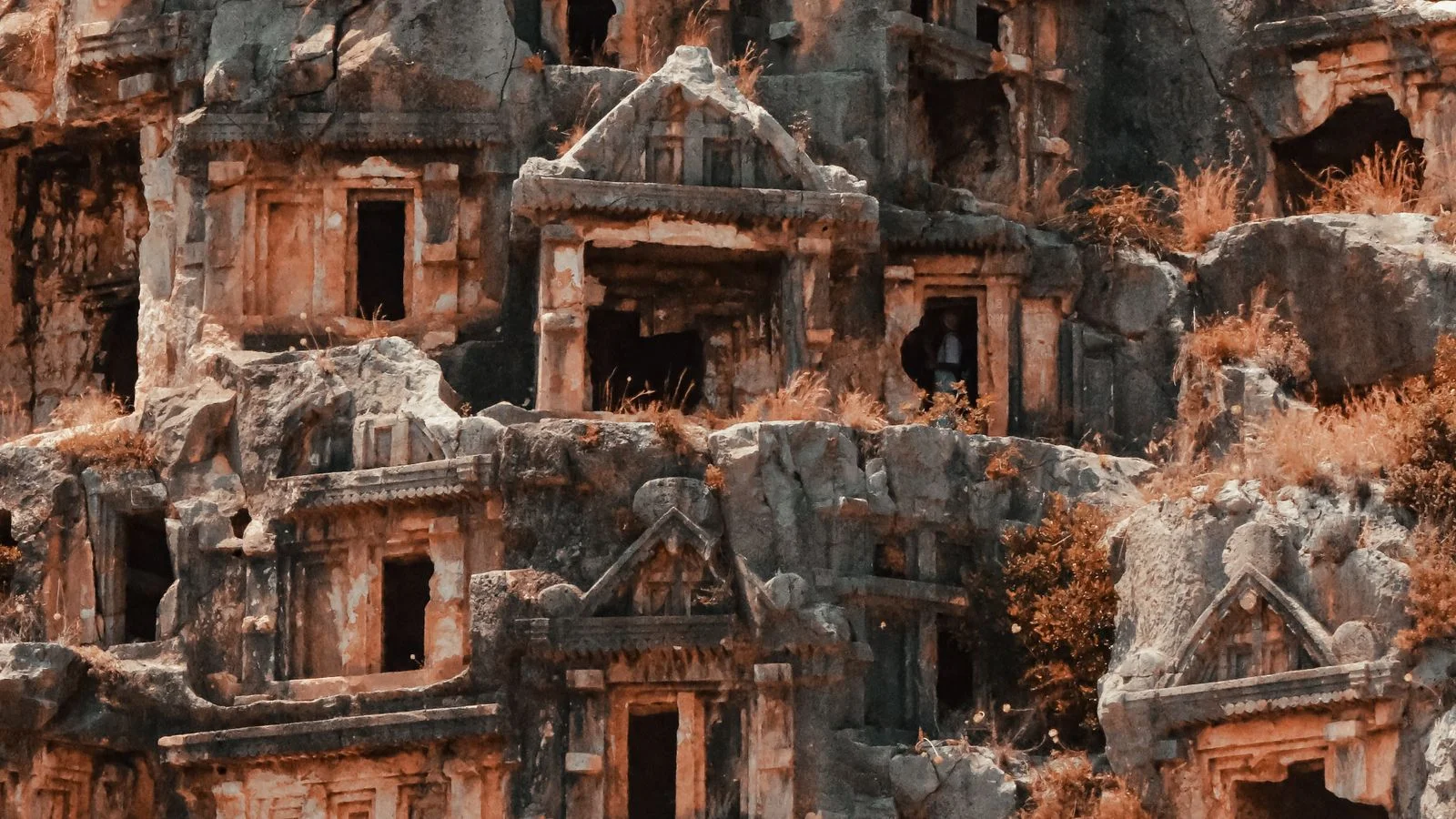
Ancient Myra lies in and beside modern Demre and once ranked among the important cities of the Lycian League. Its most recognisable sight is the necropolis cut into the cliff: house-like tomb façades, shallow reliefs and weathered openings rise above a substantial Roman theatre. Rows of stone seating give the lower site its scale, while the carved rock face provides its unmistakable silhouette. Myra later became an influential ecclesiastical centre linked with its bishop, Saint Nicholas.
Saint Nicholas Church in the modern town
The Saint Nicholas Memorial Museum, also known as Saint Nicholas Church, recalls the bishop of Myra traditionally associated with the historical figure behind Santa Claus and Father Christmas. The complex reflects several periods of construction and restoration rather than a single moment in time. Wall paintings and floor mosaics survive inside, alongside a decorated Roman-period sarcophagus traditionally connected with the saint. It remains a cultural and religious landmark for people from many countries, with particular importance in Orthodox Christian tradition.
Andriake and the Lycian museum
At Çayağzı, Andriake was Myra’s harbour district and a busy point in the region’s maritime trade. Its remains spread through a landscape of reeds and river-mouth water, including baths, churches, harbour buildings, aqueducts and the agora-cistern area. A large Roman granary built during Hadrian’s reign now houses the Museum of Lycian Civilisations, whose collections explore Lycian cities, beliefs, commerce and daily life. Another vivid trace of the port comes from murex workshops: shellfish supplied valuable purple dye, and heaps of discarded shells were later used in mortar.
Kekova, Üçağız and Demre’s beaches
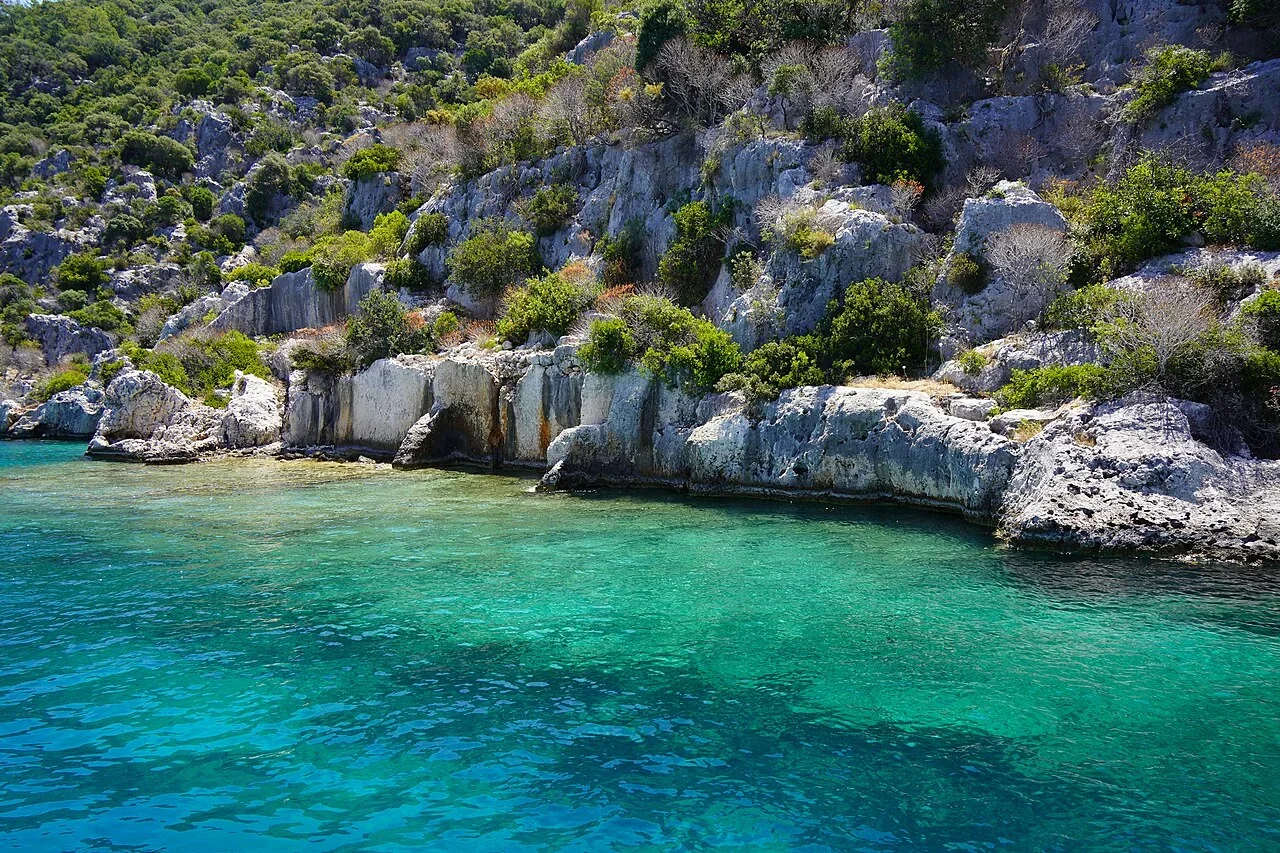
Kekova refers both to an island and to the wider protected coastal area of islands, rocky bays and ancient shoreline remains connected with Demre and neighbouring Kaş. Üçağız, a harbour village within Demre district, is a principal departure point for boat trips around these waters; Çayağzı is another departure harbour. Partially submerged walls and foundations are visible from the water along a specific ancient shoreline, rather than across every stretch of rock. Nearby Kaleköy, ancient Simena, gathers beneath a hilltop castle in a compact waterside setting.
Demre’s coast is varied, not one continuous resort beach. Çayağzı has a long sandy shore beside the harbour and wetland, Taşdibi is generally pebbly with clear water, and Sülüklü is a smaller cove. Turquoise water and pale rock define many of the surrounding inlets. Boat activity is strongest in summer, when the weather is hot; late spring and early autumn are generally milder. Sea conditions and seasonal services vary through the year.
Antalya Airport to Demre
The Antalya Airport to Demre transfer connects the airport directly with the district town. The linked route page shows the current vehicle options and booking details for this journey. This allows transport between the terminal and the accommodation address to be arranged before arrival.
Ready to book your transfer?
Fixed price, meet & greet, 24/7 — get an instant quote.
Frequently asked questions
Demre is best known for ancient Myra, Saint Nicholas Church and its links with the Kekova coast. Lycian rock tombs, Roman monuments and the church associated with Saint Nicholas are its defining sites.
Myra is the ancient city that lies in and beside the modern town of Demre. Its rock-cut tombs and Roman theatre are close to today’s streets.
Çayağzı has a long sandy shore, Taşdibi is mainly pebbly, and smaller coves such as Sülüklü appear along the coast. The shoreline varies between open beach, harbour, wetland and rocky bays.
Üçağız is a harbour village in Demre district and a principal departure point for trips around the Kekova area. Kekova includes an island, sheltered bays and ancient shoreline remains shared by the wider coastal setting near Demre and Kaş.
Demre is a modest working town rather than a large, purpose-built resort strip. Smaller-scale accommodation and generally quiet evenings give it a more local atmosphere.