
Kaş Travel Guide: Harbour, Beaches and Lycian Ruins
Explore Kaş for its compact harbour, pebble coves, Lycian remains, dramatic beaches, boat routes, diving and coastal walks.
Instant price
Book your transfer
Choose your route, travel date and passengers to see your fixed price.
- Fixed price
- Free cancellation
- Flight tracking
Kaş is a compact harbour town on a steep stretch of the Lycian coast, facing the Greek island of Kastellorizo, or Meis. The modern centre stands over ancient Antiphellos, while the Çukurbağ Peninsula reaches west into the Mediterranean. Beyond the compact centre, small coves, boat routes and archaeological sites spread across the district.
Harbour streets and ancient traces
The harbour, restaurants, small shops and narrow central streets sit within a short distance of one another, although the ground rises sharply behind the waterfront. Uzun Çarşı climbs through the centre to a large inscribed Lycian sarcophagus commonly known as the King’s Tomb. It is one of several ancient remains standing among current streets and buildings. In the evening, restaurants, cafés and bars cluster around the harbour and nearby streets, but Kaş is not a large nightclub resort.
Beaches, coves and swimming platforms
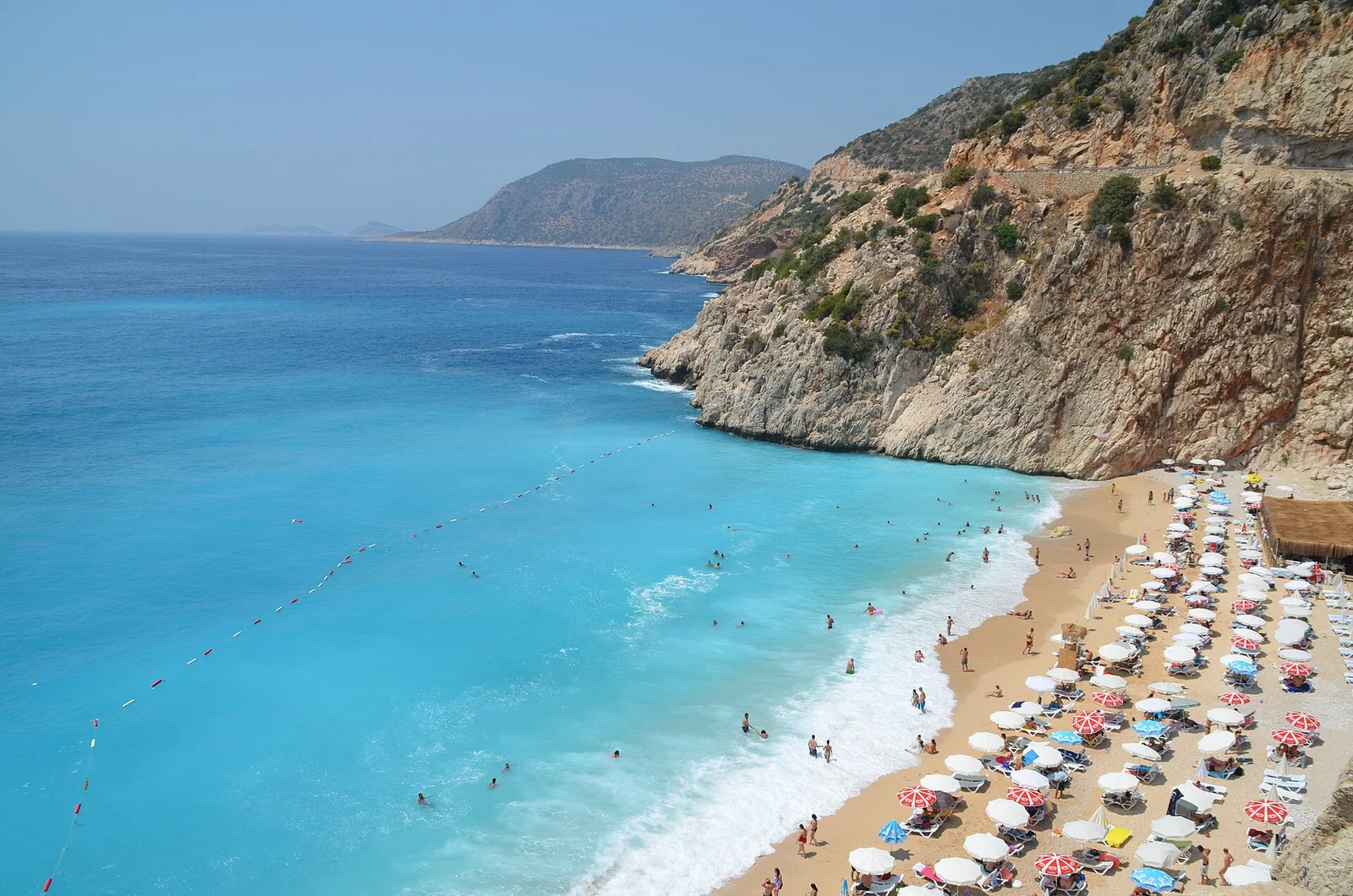
The rocky coastline gives Kaş a varied collection of swimming places rather than one continuous beach. Küçük Çakıl is a tiny central access point beside the central streets; Büyük Çakıl is a larger pebble cove east of the centre. İnceboğaz and Akçagerme offer established swimming areas around the peninsula and western approach, while small boats cross the bay to the coves of Limanağzı. Farther along the coast, Kaputaş lies below high cliffs and mixes sand with pebbles; wave conditions vary.
Antiphellos and the wider Lycian landscape
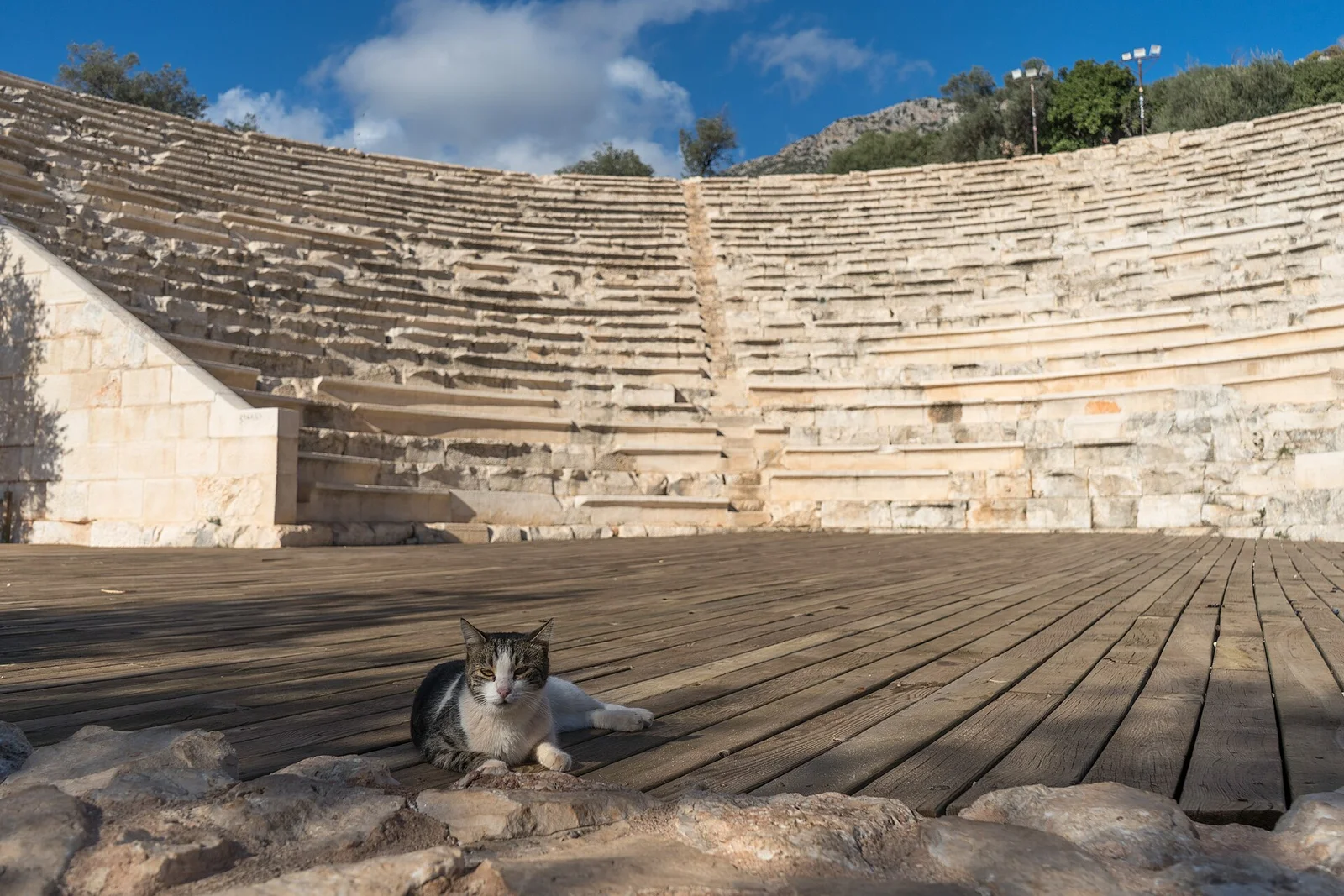
Antiphellos was an important Lycian port and commercial town, and its remains appear among present-day streets and slopes. The best-known monument is the sea-facing theatre west of the centre, built into the hillside with limestone seating. Rock-cut tombs, sarcophagi and traces of Hellenistic walls remain visible on the slopes and among the streets. Beyond Kaş, the district includes major sites at Patara, Xanthos and Letoon.
Five places and experiences around Kaş
- The harbour and Uzun Çarşı: Fishing boats and excursion vessels share the waterfront, while restaurants and small shops line the compact streets nearby. The inscribed Lycian sarcophagus stands at the top of the sloping bazaar street.
- Antiphellos theatre: The hillside theatre looks toward the Mediterranean, while nearby tombs and wall traces remain among modern streets and buildings.
- Kaputaş: This compact sand-and-pebble cove sits in a deep break between high coastal cliffs on the road toward Kalkan.
- Patara: Once the capital of the Lycian League, Patara combines a theatre, assembly building, streets and baths with a long dune-backed beach on a protected sea-turtle nesting coast.
- A day on the water: Boats follow cove-and-island routes around Kaş, and some continue toward the protected Kaş–Kekova coast, where archaeological remains occupy both land and water. Routes and swimming stops vary.
Diving, boats and coastal paths
Kaş has a long-established diving scene, with varied coastal and underwater sites explored through suitable training and professional supervision. Smaller boats link the harbour with Limanağzı, while longer outings follow island-and-cove routes. On land, the Lycian Way crosses the wider district, linking coastal and mountain landscapes, settlements and ancient sites.
Where to stay and when to visit
The centre suits travellers who value walking access to the harbour, restaurants, shops and evening venues, though streets quickly become steep away from the water. The Çukurbağ Peninsula has a more spread-out mix of hotels and villas, sea views and swimming platforms, with fewer central venues within easy walking distance. Around Büyük Çakıl, accommodation sits outside the tightest part of town but remains close to its pebble cove. Kalkan is a separate harbour town to the west and offers a useful coastal alternative rather than another Kaş neighbourhood.
Summer is hot, dry and at its busiest. Spring and autumn bring milder conditions for combining the coast, ruins and walking, while winter is generally mild and rainier, with some tourism businesses operating on reduced schedules.
Airport transfers to Kaş
Private transfers operate between accommodation in Kaş and both Dalaman Airport and Antalya Airport. Current vehicle choices and reservation details are available on the two linked route pages. The airport-to-accommodation journey can therefore be organised in advance.
Ready to book your transfer?
Fixed price, meet & greet, 24/7 — get an instant quote.
Frequently asked questions
Kaş has a steep, rocky coast, so many swimming spots are pebble coves or platforms rather than broad sandy beaches. Küçük Çakıl and Büyük Çakıl are close to the centre, while Kaputaş and Patara offer very different coastal settings farther away. Depth, waves and facilities vary between locations.
The town’s strongest experiences include exploring the harbour and Uzun Çarşı, seeing the Antiphellos theatre, swimming in nearby coves and taking a boat route along the coast. Diving, Lycian sites and sections of the Lycian Way add more active and historical dimensions.
There is no single best area for every stay. The centre places restaurants and the harbour close at hand, the Çukurbağ Peninsula offers a more dispersed coastal setting, and the Büyük Çakıl side balances proximity to town with access to a pebble cove.
Summer is the hottest, driest and busiest period. Spring and autumn are generally milder for mixing coast, ruins and walking, while winter tends to be rainier and some tourism businesses reduce their operations.
Yes, some boat excursions from Kaş travel toward the protected Kaş–Kekova coast. Exact routes, stops and departure times vary, and archaeological remains occur both on land and in the water rather than forming one single underwater attraction.