
Patara: Ancient City, Beach and Dunes
Patara features Lycian and Roman ruins, a former harbour, broad dunes and a protected sandy beach beside the village of Gelemiş.
Instant price
Book your transfer
Choose your route, travel date and passengers to see your fixed price.
- Fixed price
- Free cancellation
- Flight tracking
Patara occupies a broad archaeological and coastal landscape beside the village of Gelemiş in Antalya’s Kaş district. Once a major Lycian port, the ancient city now lies behind a long sandy shore, with a silted harbour basin, wetlands and wind-shaped dunes between its monuments and the Mediterranean.
Patara between Gelemiş and the dunes
Patara developed on the level ground of the lower Xanthos/Eşen valley near the Mediterranean. Its ancient harbour gradually filled with sediment and no longer reaches the open water; marshes and wetland vegetation occupy parts of the former basin. This change explains why the ruins appear inland from the modern shoreline even though maritime trade once sustained the city.
Gelemiş forms the modern settlement beside the site. The village and archaeological area remain distinct, while the harbour basin, dunes and beach connect them within one wider landscape.
Capital of Lycia and a Roman port
The name Patar appears in thirteenth-century BCE Hittite texts, while later Lycian inscriptions and coins use Patara. Archaeology reaches further back than the Iron Age, though no precise foundation year can be established. Patara later became the capital and principal assembly centre of the Lycian League, whose representatives met in the Council Chamber north of the theatre.
Under Roman rule, the city retained political, judicial, naval and commercial importance. Grain from Anatolia passed through its harbour and was stored in the substantial granary associated with Hadrian and Sabina. Ancient religious tradition also linked Patara with Apollo and an oracle. In the Early Christian period, Saint Nicholas was traditionally recorded as having been born here, while the New Testament account of Saint Paul includes a change of ship at Patara.
Streets, public buildings and the lighthouse
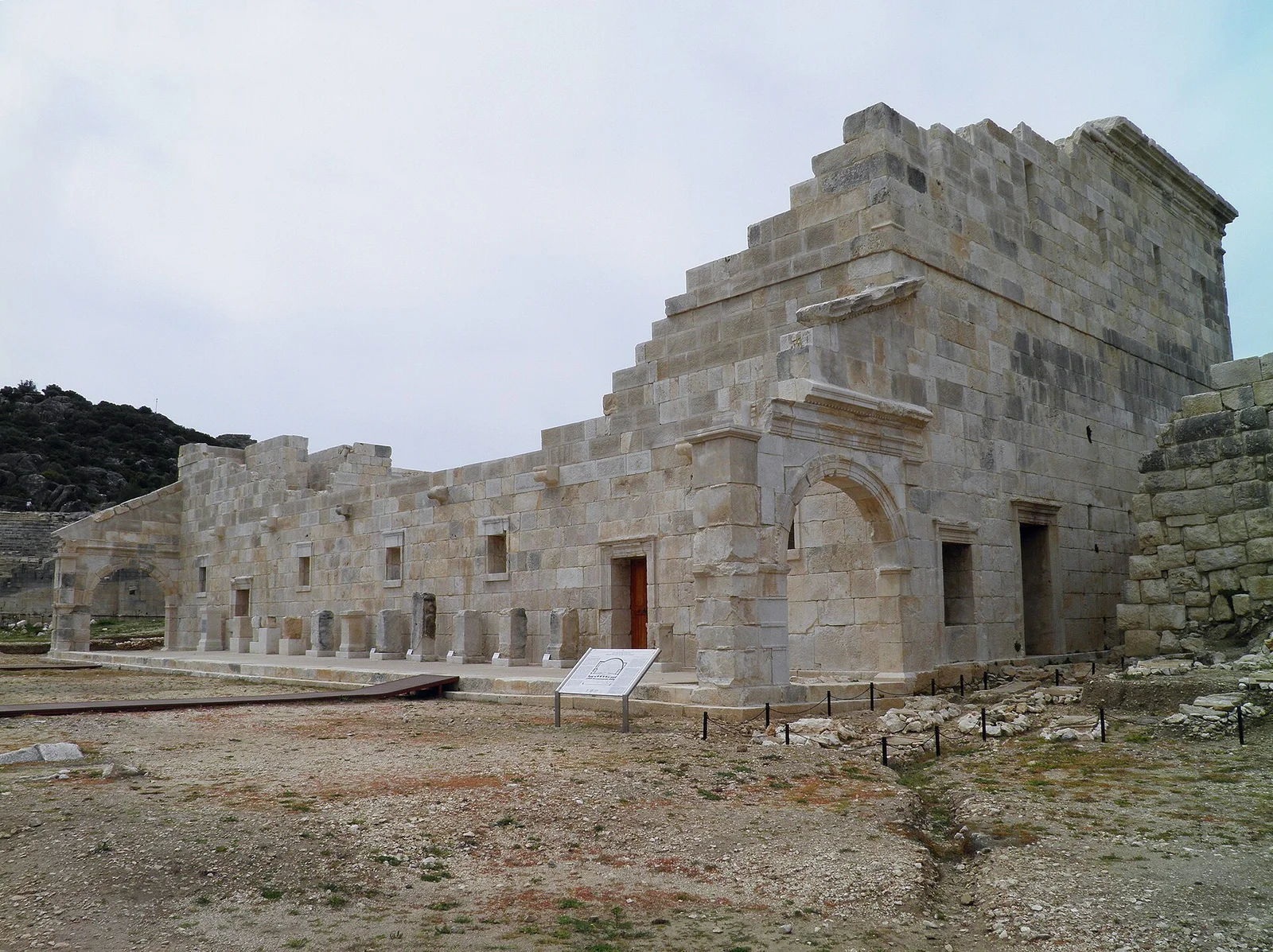
Patara’s monumental city gate, dated by inscriptions to around the turn of the second century CE, marks one of the most recognisable approaches to the ruins. Lycian sarcophagi and the necropolis line parts of the ancient setting, while the main colonnaded street leads through a civic centre of baths, basilicas, churches and waterworks. The theatre rests against Kurşunlu Hill and bears evidence of Roman-period repair after earthquake damage. Nearby, the restored Council Chamber preserves the setting in which the Lycian League assembled.
The granary and traces around the former harbour recall Patara’s working waterfront. On the harbour’s southwestern side, thousands of blocks from the Roman lighthouse survived beneath a large dune. Foundation evidence associates the structure with Nero, and reconstruction studies have revealed how much of its original stone fabric remained.
Beach, village evenings and the seasons
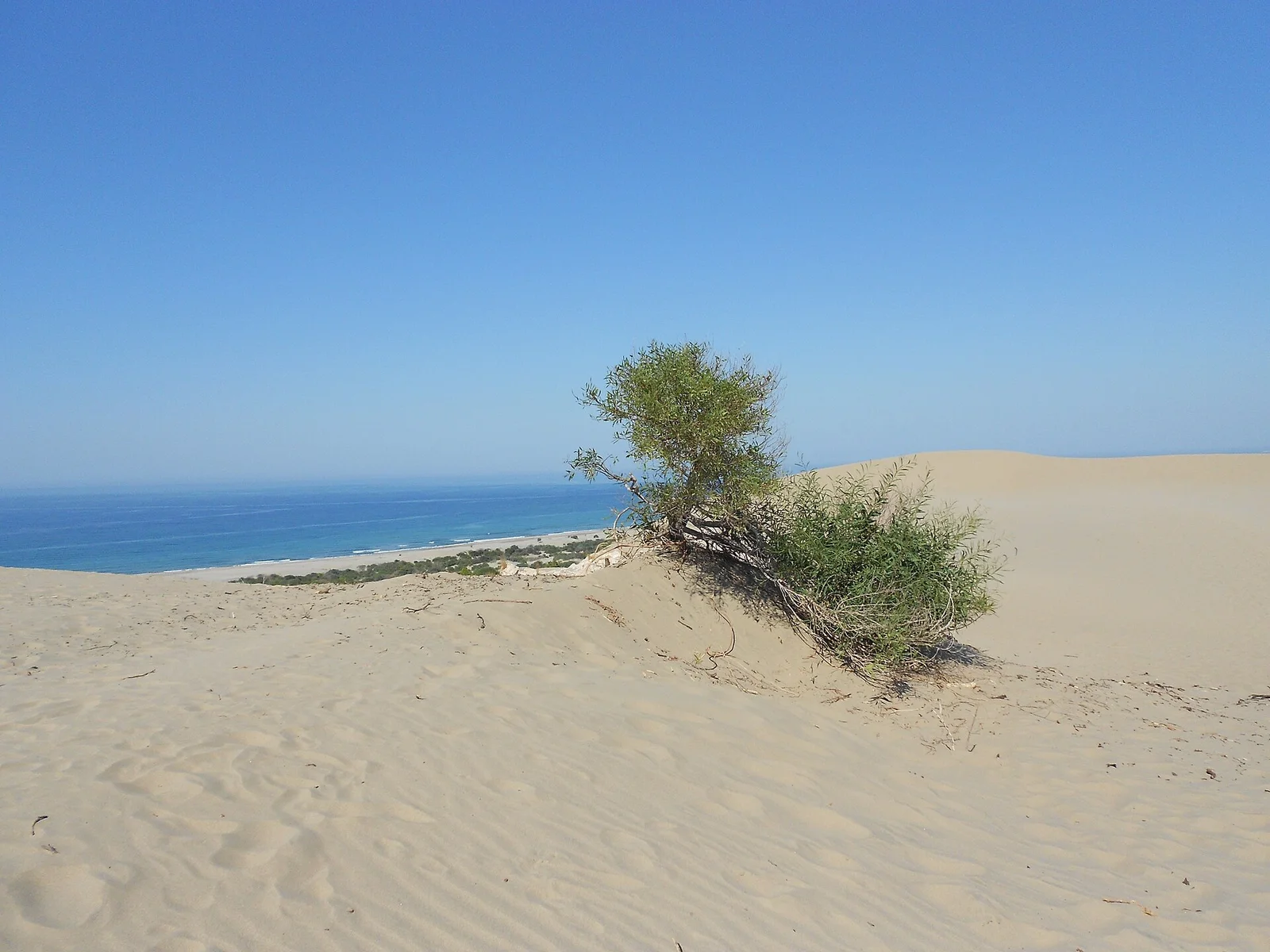
Beyond the ancient city and former harbour, Patara Beach stretches along a very long sandy coast backed by broad dunes. The beach belongs to the Patara Special Environmental Protection Area, and its sand provides important nesting habitat for loggerhead sea turtles. Broad belts of open sand lie behind the shoreline, without a continuous beachfront resort strip.
Accommodation is concentrated in Gelemiş rather than directly on the beach. Small hotels, pensions, guesthouses, apartments and garden properties sit around the village, where evenings centre on modest restaurants, pension gardens and quiet streets. High summer brings the hottest weather and greatest activity; spring and early autumn are generally milder, though conditions and business availability vary.
Kalkan and Kaş along the coast
East of Patara, Kalkan is a separate small harbour town with villas, boutique hotels and a compact old centre. Farther east, Kaş is a larger coastal town with its own harbour, restaurants and accommodation. Both lie east along the same coast, but neither forms part of Patara or Gelemiş.
Dalaman Airport to Patara transfer
The Dalaman Airport to Patara private transfer provides direct transport between the airport and accommodation in Gelemiş. The linked route page shows the current vehicle options and booking details for this journey. This allows transport between the terminal and the accommodation address to be arranged before arrival.
Ready to book your transfer?
Fixed price, meet & greet, 24/7 — get an instant quote.
Frequently asked questions
Patara is an ancient Lycian port city in the lower Xanthos/Eşen valley of Kaş district, Antalya. Its archaeological landscape and protected coast lie beside Gelemiş, the modern village where most local accommodation and restaurants are found.
Visible remains include the monumental city gate, sarcophagi, theatre, Council Chamber, colonnaded street, baths, basilicas, waterworks and granary. The former harbour basin, associated structures and remains of the Roman lighthouse extend the archaeological landscape towards the coast.
Patara Beach is a long sandy coast backed by broad, wind-shaped dunes within a protected environmental area. It lies seaward of the ancient city and the marshy former harbour basin.
Most accommodation is concentrated in Gelemiş rather than directly on the protected beach. Small hotels, pensions, guesthouses, apartments and garden properties are common around the village.
Patara served as the capital and principal assembly centre of the Lycian League, then retained political, commercial and naval importance under Roman rule. In Christian history, Saint Nicholas is traditionally recorded as having been born here, and the New Testament recounts Saint Paul changing ships at Patara.