
Kumluca Travel Guide: Town, Coast and Ancient Sites
Explore Kumluca’s inland town, the bays of Adrasan and Karaöz, Olympos and Rhodiapolis, with practical context for a coastal holiday.
Instant price
Book your transfer
Choose your route, travel date and passengers to see your fixed price.
- Fixed price
- Free cancellation
- Flight tracking
Kumluca spreads far beyond its town centre. The town itself stands on a broad, fertile plain inland from the Mediterranean, with mountains enclosing it on three sides. Greenhouses fill much of the surrounding landscape, and tomatoes and other vegetables are part of both the local economy and the everyday view. It feels like the working heart of an agricultural district, with ordinary shops, markets and restaurants rather than a beach-resort promenade.
The holiday coast lies in separate valleys, bays and settlements across the district. Adrasan Bay has a long beach beneath wooded slopes; Olympos occupies a forested river valley close to the sea; Karaöz has a smaller-scale, rockier coastal character. Together, these places give Kumluca a varied geography that is easier to understand as a district than as a single resort.
Kumluca travel guide: town and coast
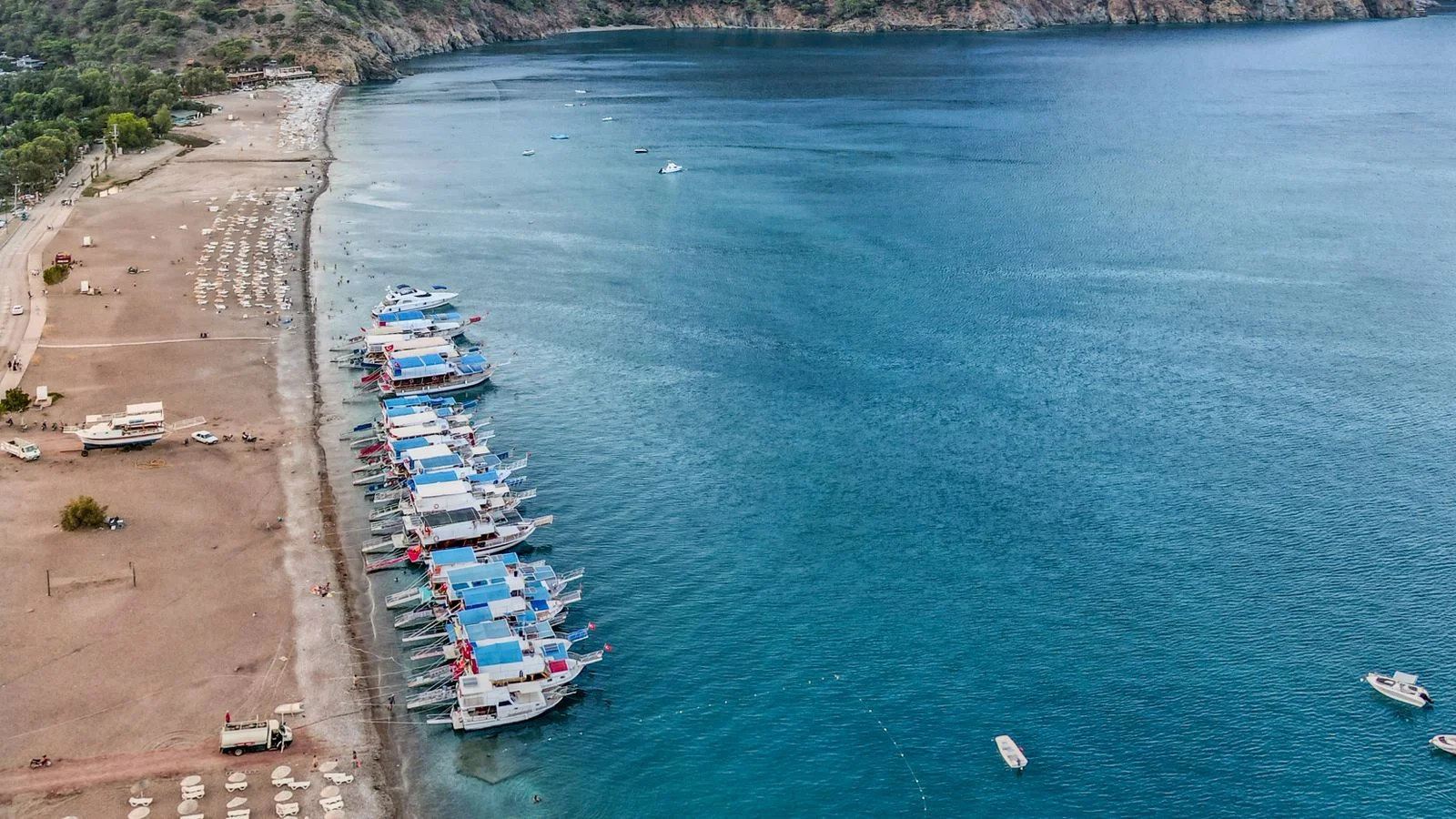
Adrasan is the most recognisable bay setting, with pensions, small hotels, restaurants and excursion boats spread along the shore. Its beach includes sandy and small-pebble sections. Boat trips often head towards Suluada and nearby coves, although routes and stops depend on the operator. Evenings tend to revolve around meals by the bay and the modest accommodation areas rather than a large nightlife district.
Olympos has a different rhythm. The archaeological site, river channel, dense vegetation and coast belong to the same wooded valley, while nearby stays are better known for pensions and bungalow-style properties than for a continuous resort strip. Part of this eastern coastline lies within Beydağları Coastal National Park, where Mediterranean forest follows long stretches of shore.
Karaöz, on the district’s western side, is smaller and has fewer visitor services than Adrasan. Its coves and proximity to the Lycian Way suit a more landscape-led coastal stay. Mavikent and the wider coastal plain feel more open, with a long shore backed in places by farmland and summer homes. Beach surfaces, facilities and sea conditions change from one section to another.
Places that give the district its character
Adrasan Bay brings together a long shoreline, wooded hills and the comings and goings of excursion boats. The bay’s scale and relaxed seafront make it one of the district’s clearest holiday centres.
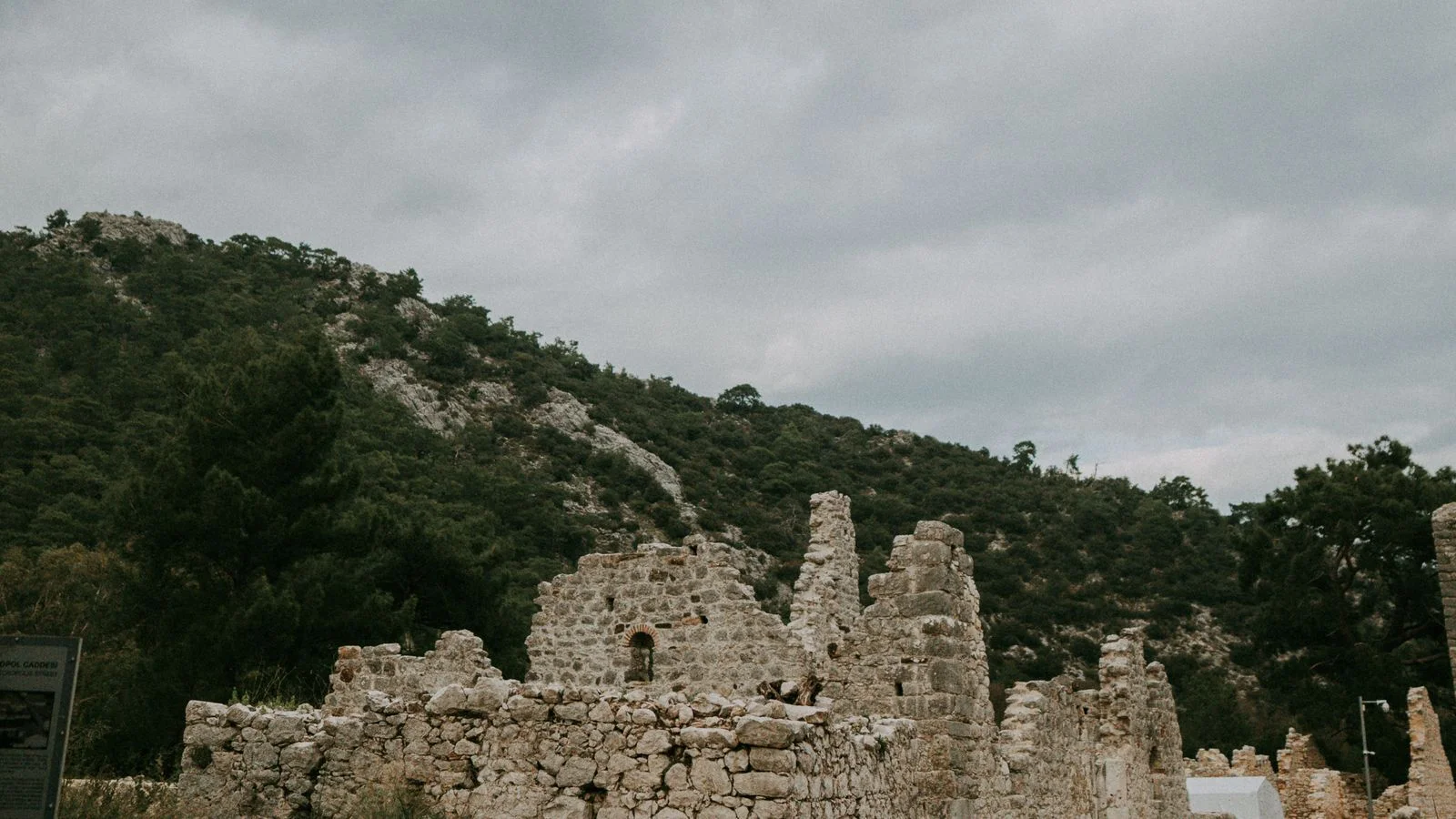
Olympos Archaeological Site places Lycian history directly inside a green river valley. City walls, a theatre, tombs, bridge remains and later religious buildings appear among the trees, giving the ruins a close relationship with the landscape and nearby coast.
Rhodiapolis stands on a hill near Sarıcasu, close to Kumluca town. The ancient city includes a theatre and civic remains and is closely associated with Opramoas, the wealthy Lycian benefactor whose inscription-covered monument is a defining feature of the site.
Gelidonya Lighthouse stands high on Taşlık Burnu, within the substantial walking landscape of the Lycian Way. Its position above the open Mediterranean explains why it has become one of the route’s best-known coastal viewpoints.
The Karaöz and Korsan Koyu coast combines coves, a rockier shore and traces connected with ancient Melanippe. It also forms part of the wider route towards Gelidonya, where the district’s coastal history and rugged terrain remain closely intertwined.
Evenings and seasons
Kumluca town settles into an everyday local pace after dark, while Adrasan and Olympos have quieter evenings shaped by small accommodation areas and restaurants. Summer is hot and dry, and the coast is at its busiest. Spring and autumn often bring gentler conditions for combining ancient sites, coastal walking and time by the sea. Winter is quieter, with some tourism businesses operating on a reduced basis.
Antalya Airport transfers to Kumluca
A pre-booked Antalya Airport to Kumluca transfer can simplify the arrival, whether the stay is in town or along the district’s coast. Current vehicle choices and reservation details for the journey are available on the linked route page. The airport-to-accommodation journey can therefore be organised in advance.
Ready to book your transfer?
Fixed price, meet & greet, 24/7 — get an instant quote.
Frequently asked questions
No. Kumluca town lies inland on a fertile agricultural plain, while the district’s holiday coast is spread across separate places such as Adrasan, Olympos, Karaöz and Mavikent.
They vary considerably across the district. Adrasan has sandy and small-pebble sections in an enclosed bay, Karaöz is associated with smaller coves and rockier stretches, and the Mavikent coast is longer and more open. Facilities and sea conditions differ by location and section.
The district’s highlights include exploring the ruins at Olympos and Rhodiapolis, spending time around Adrasan Bay, and experiencing the Lycian Way landscape near Gelidonya Lighthouse. The Karaöz and Korsan Koyu coast adds coves and the setting of ancient Melanippe.
The right area depends on the character of the trip. Adrasan suits a bay-based coastal holiday with restaurants and boat excursions, Olympos has a wooded valley atmosphere with pensions and bungalow-style stays, and Karaöz is smaller with more limited services. Kumluca town is the district’s practical inland centre rather than a beach resort.
Summer is the busiest period for beach holidays and is typically hot and dry. Spring and autumn often suit trips that combine the coast with archaeological sites and walking in less intense heat. Winter is quieter, and some tourism businesses reduce their operations.