
Olympos: Ancient Ruins, Forested Valley and Beach
Olympos spans Lycian ruins, a forested river valley, a sand-and-pebble beach, wooden cabins and a coast shared with neighbouring Çıralı.
Instant price
Book your transfer
Choose your route, travel date and passengers to see your fixed price.
- Fixed price
- Free cancellation
- Flight tracking
Olympos occupies a forested valley where a stream passes through the remains of an ancient Lycian port city and reaches the Mediterranean. The site lies in the Yazır area of Antalya’s Kumluca district, within Beydağları Coastal National Park. Stone walls, trees and riverside paths now share ground that once formed a busy urban harbour.
The Olympos valley from stream to shore
The archaeological remains extend along both banks and continue towards the coast. In antiquity, builders channelled the watercourse, used its sides as harbour space and linked the two halves of the city by bridge. One surviving bridge pier still marks that crossing, while harbour structures near the river mouth indicate how closely the settlement followed the water.
At the seaward end, the valley opens onto a beach with a surface that mixes sand and pebbles in varying proportions. Forested slopes frame the river, ruins and shore, keeping the ancient city within a visibly protected coastal landscape.
From the Lycian League to Late Antiquity
The foundation date of Olympos remains unknown, but its name appeared on Lycian League coinage in the second century BCE. It ranked among the League’s six major cities and held three votes. Pirate power affected the city during the first century BCE, followed by Roman control.
Olympos retained importance through the Roman and Early Byzantine periods. Much of the surviving urban fabric reflects construction in the fifth and sixth centuries CE, when churches and the episcopal complex reshaped parts of the city. Evidence points to a gradual contraction of urban life rather than one sudden disaster. Rescue excavations began in the early 1990s, with surveys and systematic archaeological work continuing later.
Ruins among trees on both banks
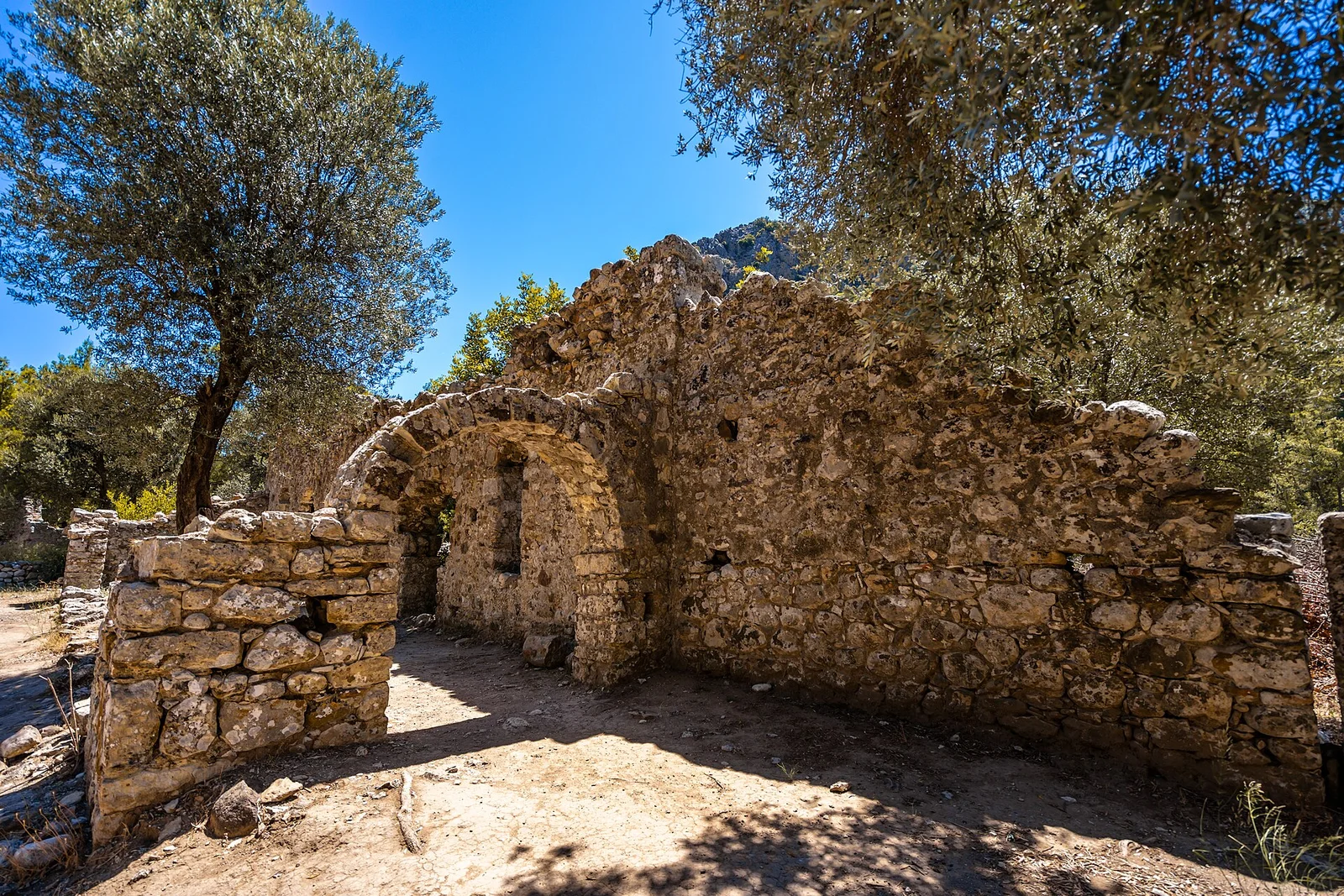
The northern and southern banks contain distinct groups of buildings. A small theatre preserves Hellenistic foundations and Roman repairs, while a monumental temple doorway carries an inscription associated with Marcus Aurelius. Baths, a basilica, churches, tombs, sarcophagi, harbour works and later fortifications occupy clearings and shaded paths throughout the valley.
Near the river mouth, the sarcophagus of Captain Eudomos bears a ship relief and an inscription. The carved vessel recalls harbour activity, while the lone bridge pier marks the former crossing between the banks. Dense vegetation now grows between masonry, but the distribution of the remains still reveals a city arranged around water.
Beach days and evenings in the valley
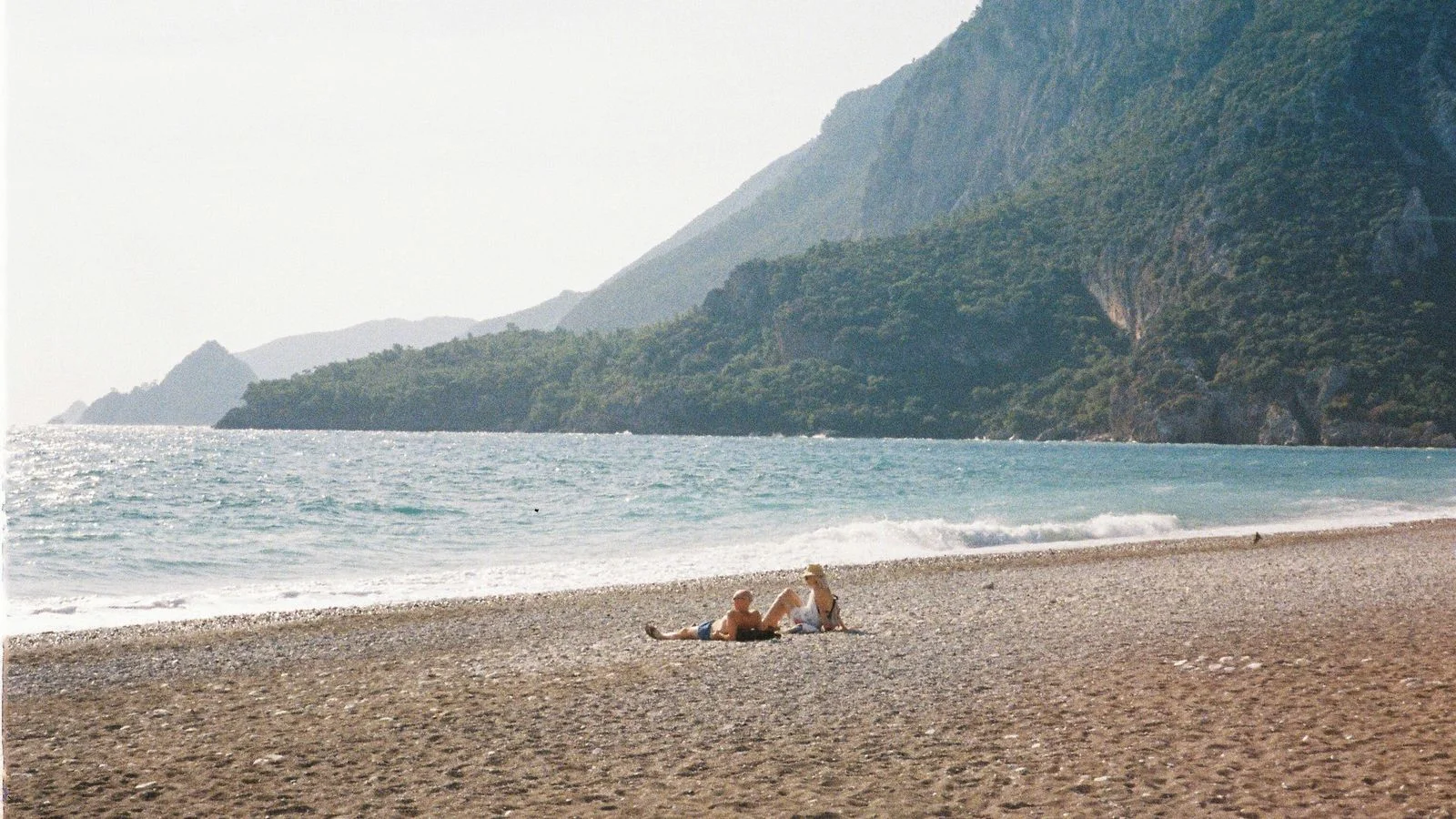
The beach begins where the ruins reach the Mediterranean and continues eastward along the coast. Its protected natural setting is also associated with sea-turtle nesting. Inland, accommodation occupies the valley outside the archaeological remains rather than the shore or ancient buildings.
Wooden cabins and bungalows commonly marketed as tree houses sit alongside small pensions, guesthouses and camping-style properties. Many are raised timber cabins, not rooms built within a tree canopy. Shared gardens, simple restaurants, bars and social common areas shape the evenings. High summer brings the hottest and busiest period, while spring and early autumn are generally milder.
Çıralı, Yanartaş and Adrasan nearby
The beach continues towards Çıralı, a lived-in coastal settlement immediately east and northeast of Olympos, with pensions and gardens behind its shoreline. Yanartaş, also known as Chimaera, lies several kilometres from the ruins on the inland slope near Çıralı.
South of Olympos, Adrasan occupies its own bay and settlement. These neighbouring places belong to the same broad stretch of the Antalya coast, yet each has a separate physical setting.
Antalya Airport transfer to Olympos
A private transfer from Antalya Airport to Olympos provides a direct journey from the terminal to the valley. The linked route page shows the current vehicle options and booking details for this journey. This allows transport between the terminal and the accommodation address to be arranged before arrival.
Ready to book your transfer?
Fixed price, meet & greet, 24/7 — get an instant quote.
Frequently asked questions
Olympos is an ancient Lycian port city in the Yazır area of Kumluca district, Antalya. Its ruins fill a forested stream valley inside Beydağları Coastal National Park and extend towards the Mediterranean.
Visible remains include a small theatre, a monumental temple doorway, baths, a basilica, churches, the episcopal complex, tombs and harbour structures. The Captain Eudomos sarcophagus, a bridge pier and later fortifications add further detail on both banks.
The beach lies at the Mediterranean end of the valley, where the archaeological remains meet the coast. Its surface includes both sand and pebbles, and the shoreline continues east towards Çıralı.
The inland valley outside the ancient remains contains wooden cabins and bungalows often marketed as tree houses. Small pensions, guesthouses and camping-style properties are also characteristic of the area.
Olympos centres on the ancient city and its forested river valley, while Çıralı is a lived-in beach settlement immediately along the coast. Yanartaş is a separate site on the inland slope near Çıralı, several kilometres from the Olympos ruins.