
Side Holidays: Ancient Streets, Beaches and Harbour Life
Plan a Side holiday with a clear guide to its beaches, ancient theatre and temples, old-town atmosphere, and distinct resort areas.
Instant price
Book your transfer
Choose your route, travel date and passengers to see your fixed price.
- Fixed price
- Free cancellation
- Flight tracking
Side occupies a slim Mediterranean peninsula where an archaeological site, an inhabited old town, a small harbour and two stretches of coast share one compact setting. The monumental streets of ancient Pamphylia run close to present-day restaurants and shops; a turn through the lanes can lead from Roman masonry to fishing boats or the beach. This closeness gives Side holidays a character that feels both historic and comfortably lived-in.
The character of Side holidays
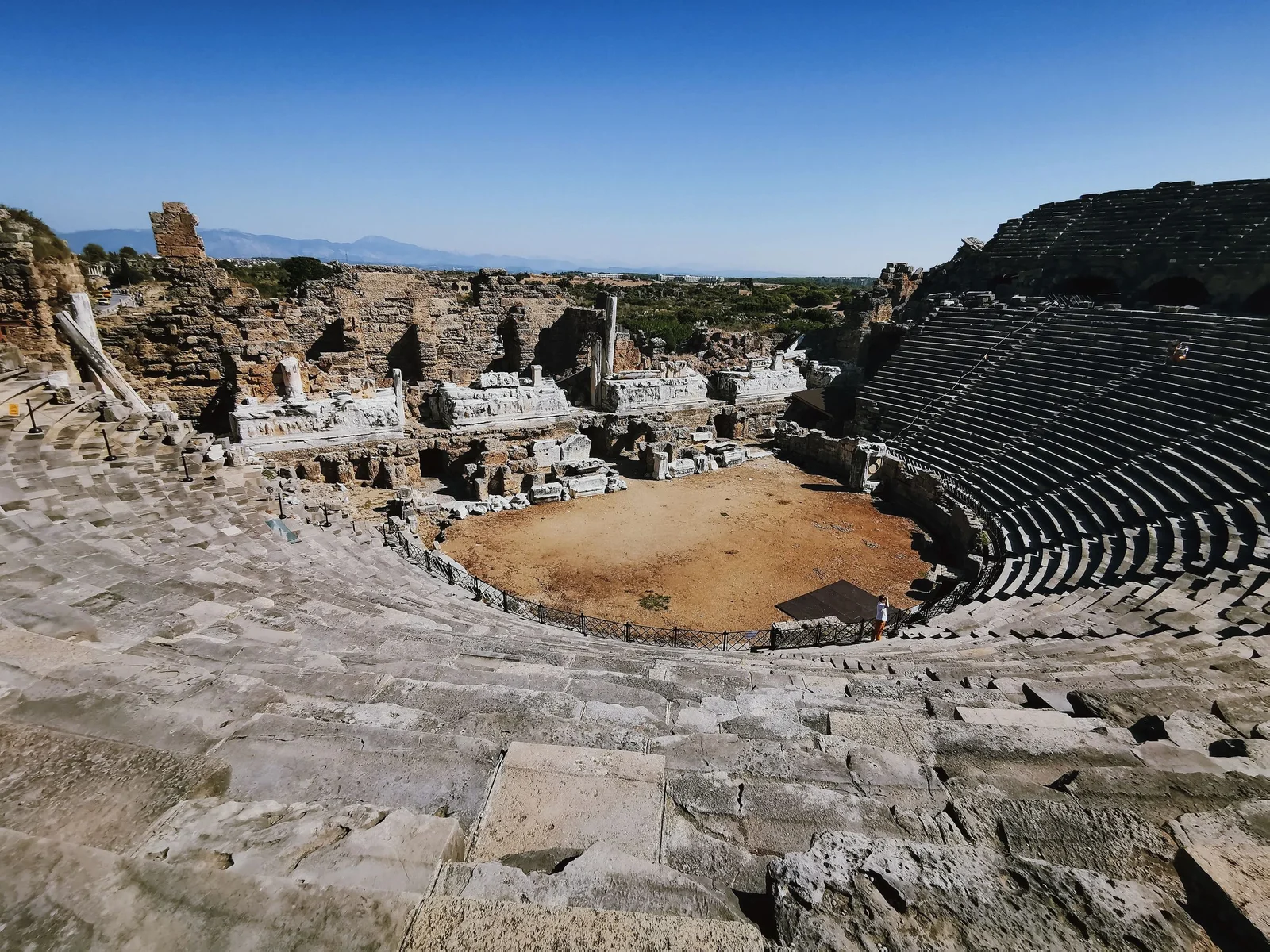
Central Side is easy to understand on foot. The theatre stands near the narrow point of the peninsula, while the old-town lanes continue towards the harbour and the seafront temple remains. Rather than sitting in a separate archaeological park far from the resort, the ruins form part of the townscape. Conservation and restoration can affect access to individual monuments, but their scale is visible throughout the centre.
After sunset, pedestrian streets, harbour restaurants, small shops and illuminated stonework create a lively but relaxed resort-town atmosphere. The evening appeal comes from this compact mix, not from a promise of all-night clubbing.
Five places that give the peninsula its shape
- The theatre, monumental gate and ancient streets reveal the scale of Roman Side. The theatre is especially distinctive: its visible form combines a Hellenistic plan with Roman construction, including vaulted supports beneath the upper seating.
- Side Museum occupies a restored Roman bath beside the agora. Sculpture, reliefs, inscriptions and other excavated finds place the surrounding ruins in a clearer historical context.
- The Apollo and Athena temple remains stand near the ancient harbour, where surviving columns and foundations face the Mediterranean shoreline. The setting makes the ancient port easy to picture without separating it from the modern waterfront.
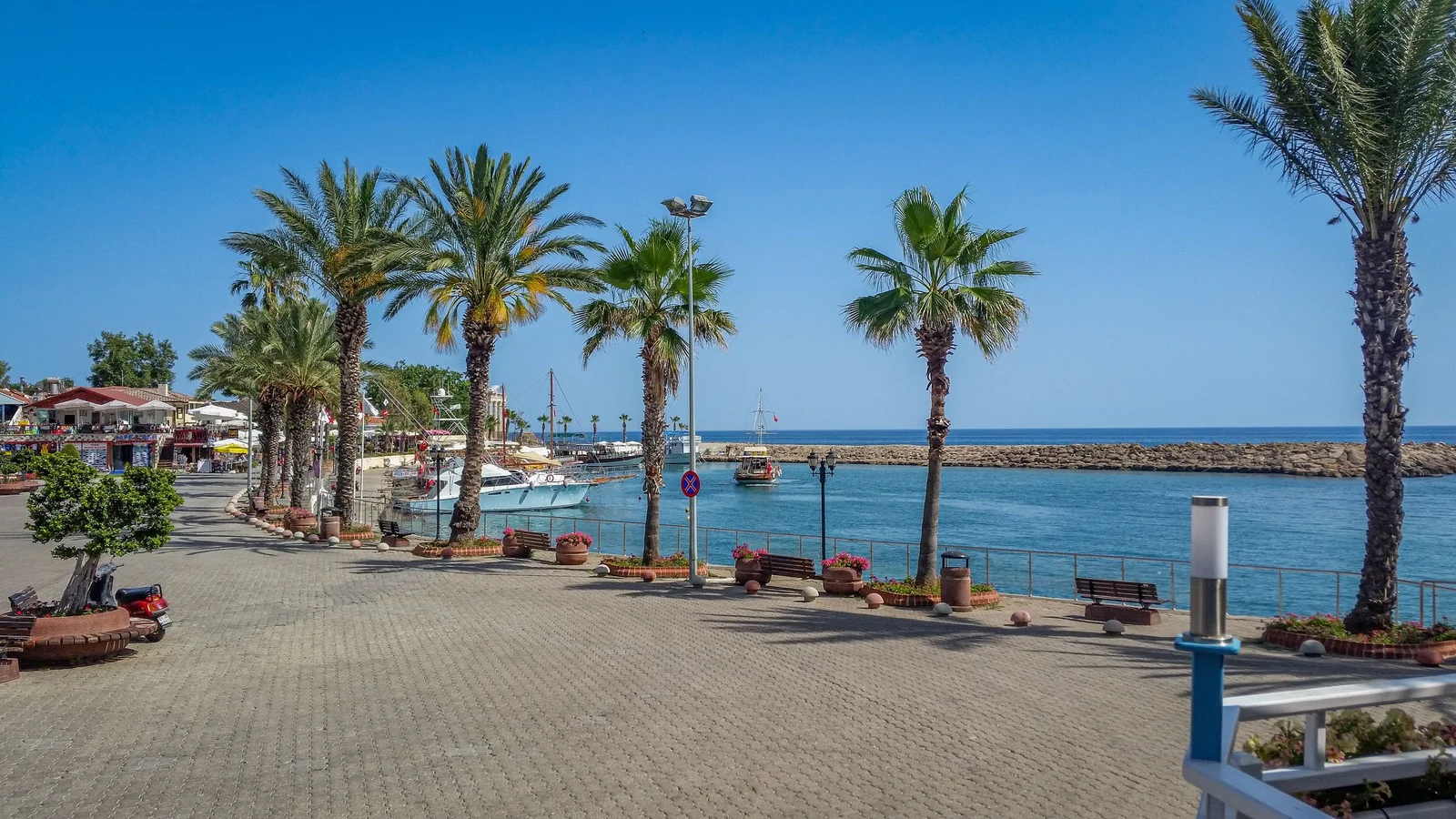
- The old-town lanes and harbour in the evening show Side at its most sociable, with restaurant terraces and small shops set among historic fabric and harbour activity.
- The coast on either side of the peninsula gives a broader view of the town: beaches extend away from a centre still marked by walls, streets and monumental remains.
Beaches on both sides
Side has sandy sections to the west and east of the peninsula, though the shore is not uniform. Sand texture, occasional stones, water depth, waves, facilities and the degree of resort use all vary by stretch and weather. The western coast continues towards Kumköy, part of a busier hotel-and-beach corridor, while the eastern side opens towards the greener Sorgun coast.
The central beaches work particularly well with the peninsula's history and harbour life: the sea is part of a day centred on the old town rather than a separate resort experience. Farther along the coast, beach facilities and large resort grounds play a stronger role.
Different bases, different rhythms
The peninsula suits travellers who value walkability and want ruins, lanes, restaurants, harbour and coast close together. Kumköy has a denser concentration of large hotels and visitor services west of Side. Sorgun lies to the east, where pine forest borders the coast and resort grounds tend to feel more self-contained. Titreyengöl, farther east near the river-and-lake landscape, has another cluster of large resort properties.
Inland, Manavgat town is the district's river city and commercial centre, distinct from Side's beach peninsula. The Manavgat River and waterfall provide the most natural nearby connection to the wider district, while Köprülü Canyon is a larger inland excursion associated with river and gorge scenery.
Seasons on the Manavgat coast
Summers are very hot and dry, with holiday life focused strongly on swimming and the resorts. Spring and autumn often make a comfortable match for archaeological visits, walking and time by the sea in less intense heat. Winter is milder and quieter, although some seasonal businesses may operate reduced hours. Conditions and the swimming season vary from year to year.
Antalya Airport transfers to Side
A pre-booked Antalya Airport to Side transfer connects the airport with the peninsula and surrounding resorts. The route page brings together the live vehicle options and booking information for this connection. Travellers can arrange the journey from the airport to their accommodation before they arrive.
Ready to book your transfer?
Fixed price, meet & greet, 24/7 — get an instant quote.
Frequently asked questions
Beaches extend from both sides of the peninsula, and sandy sections are common. Conditions are not identical along the coast: sand texture, occasional stones, water depth, waves and facilities depend on the particular stretch and the weather.
Side's main experiences centre on the ancient theatre and streets, the museum in a Roman bath, the harbour-side temple remains and the old town. The beaches and evening waterfront add a coastal dimension, while the Manavgat River and waterfall connect the peninsula with the wider district.
There is no single best area for every holiday. The peninsula is the most walkable base for ancient sights, harbour life and restaurants; Kumköy has a busier resort corridor, while Sorgun offers pine-fringed surroundings and more self-contained resort grounds.
Side can suit families because beaches, restaurants and historic sights are available within a relatively compact destination. The most suitable area and beach depend on children's ages and a family's preferences, as shore conditions and facilities vary along the coast.
Spring and autumn often suit travellers who want to combine the ancient city, walking and the beach without peak summer heat. Summer is hotter and more focused on swimming and resort life, while winter is quieter and some seasonal businesses reduce their hours.